The curriculum is already outside.
For over ten years, I took my own classes outside, in nature, to learn. So much of the rich learning happened in the schoolyard. If learning can thrive there, it can thrive right outside your classroom walls too.
Whatever you are teaching this week, some of it can happen outside your classroom and on your schoolyard, and all of it can be tied back to learning.
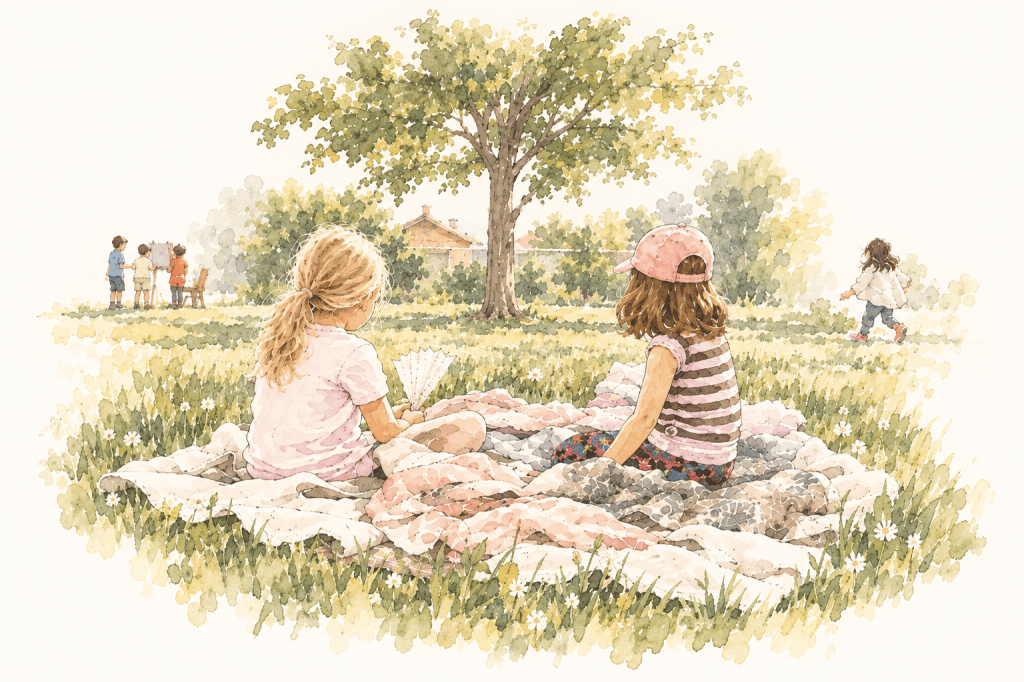
Start here
Thinking Outside is sorted into three categories: Starting Out, Going Further, and Digging Deeper. Starting Out is teacher-guided. Going Further is inquiry-based. Digging Deeper is student-led. If that progression feels familiar, it is the gradual release of responsibility from teachers’ college: I do, we do, you do. Find the one that fits where you are and start there.
Starting Out
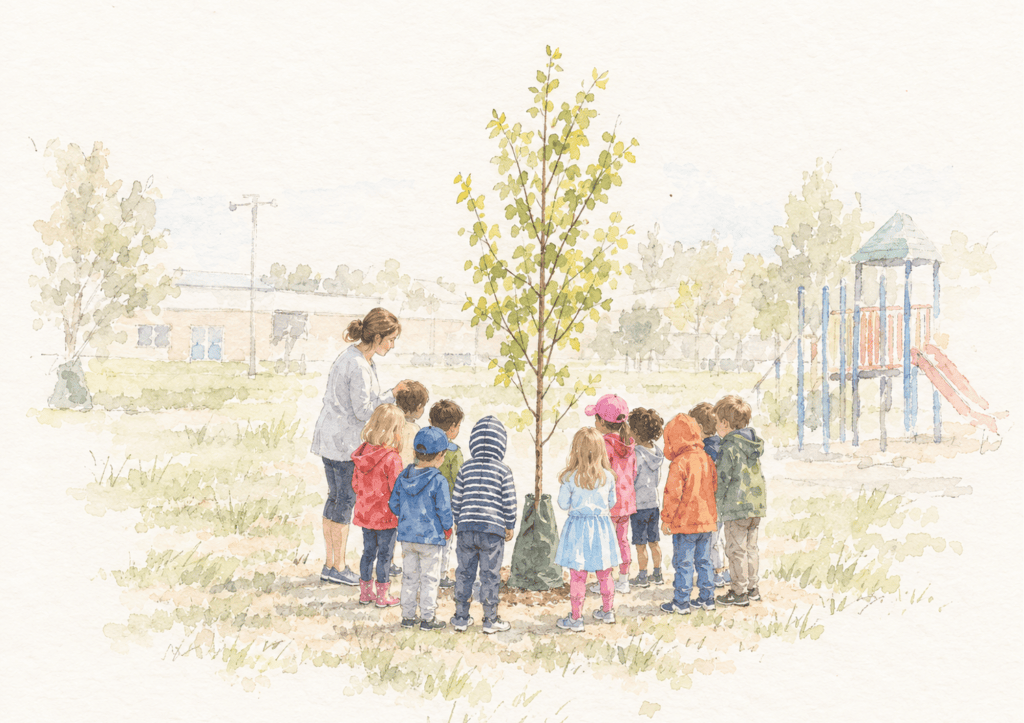
New to teaching outside, whatever your years in the classroom. These more structured guides walk you and your students through exactly what to do during those first visits outdoors.
Going Further
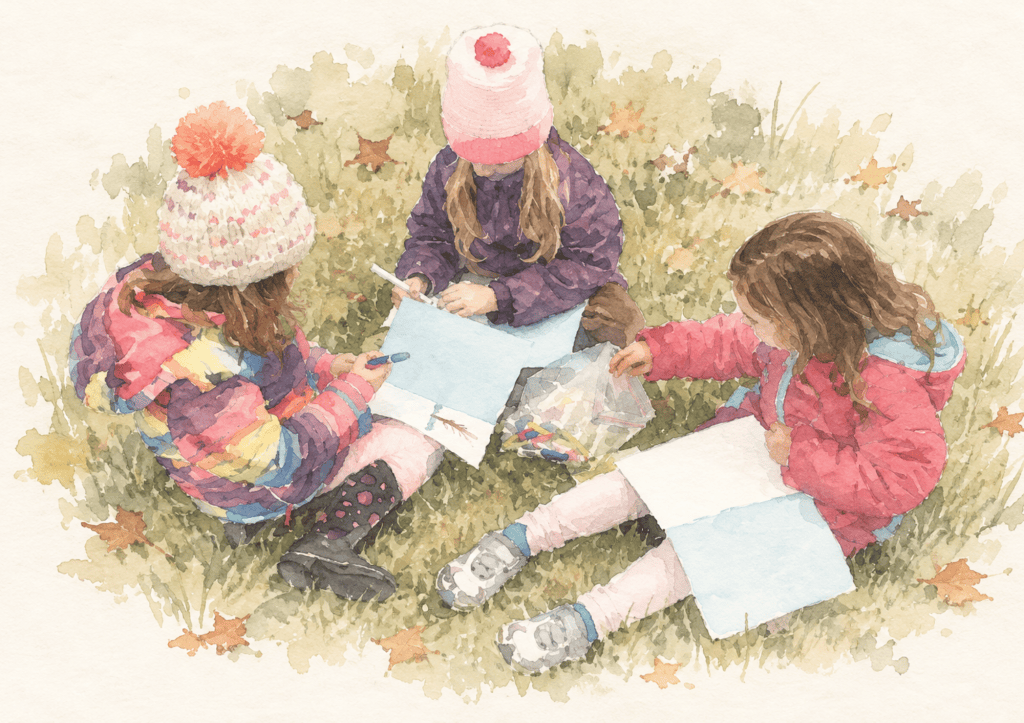
You have been outside a few times, and it went well. Now you want an approach that taps into students’ interests, and you are willing to follow their lead.
Digging Deeper
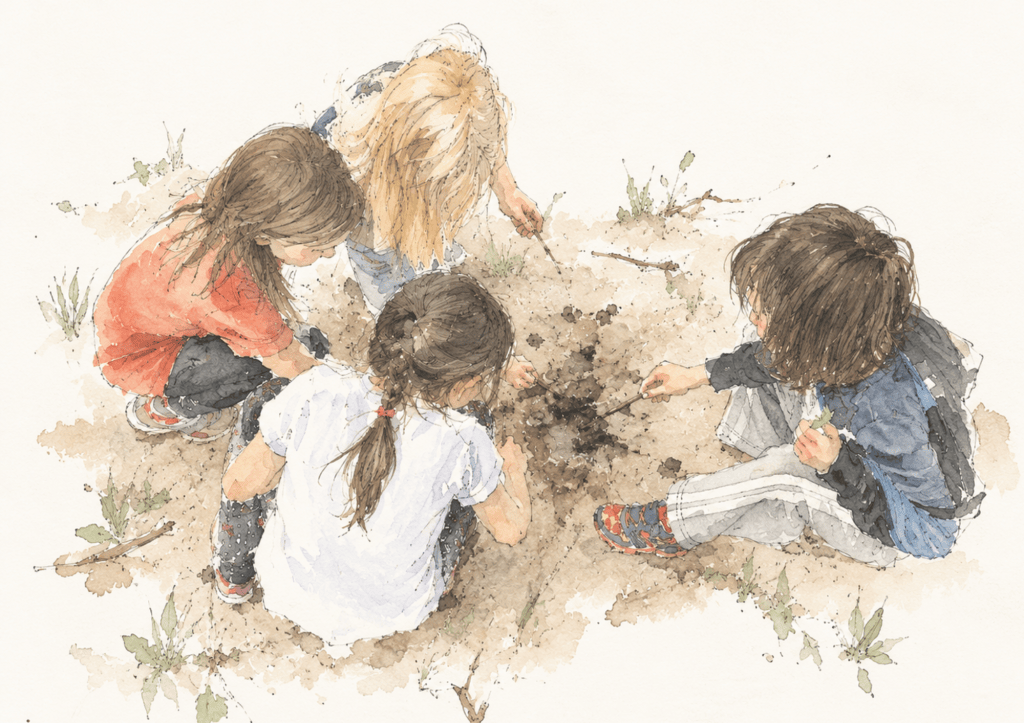
You are comfortable outside, and you have started asking harder questions. How are we connected to this Land? Who is affected by what we do here?
Not sure where you fit? Start with the big idea: Outdoor Learning on a Schoolyard.
Coming this fall
Two collections of learning activity guides, each one tested with my own classes on an ordinary schoolyard and written to be run cold by a teacher who has never taken a class outside.
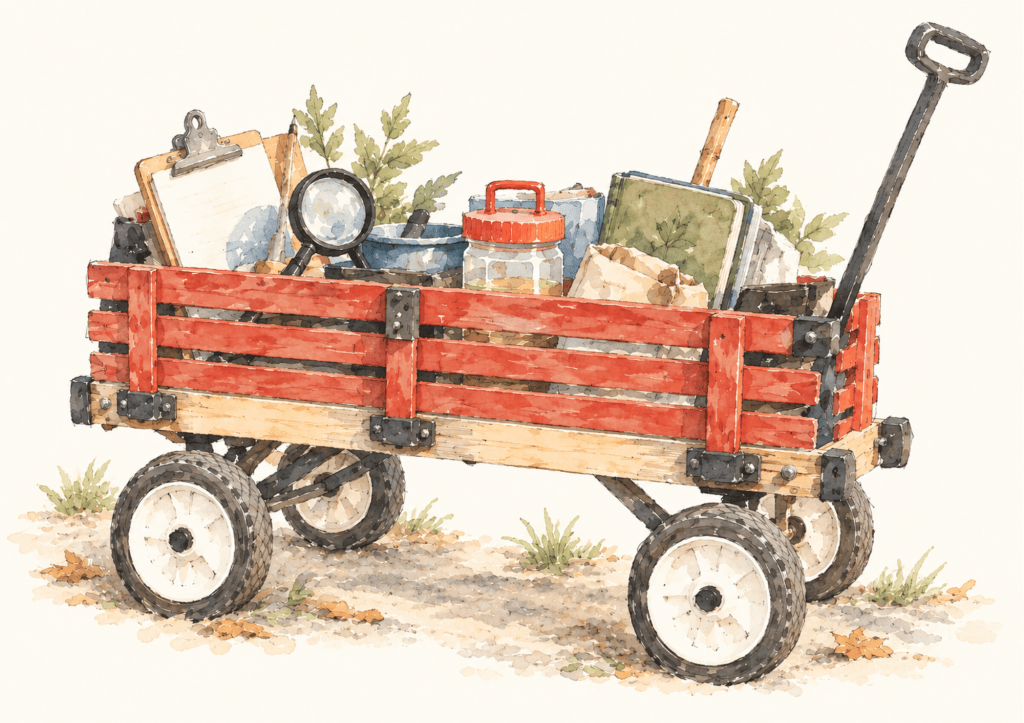
The Getting Started Pack
The routines that make the first outings work: a session from start to finish, finding and naming a home base, the gather-back signal your class learns before you need it, sticks need space, forest jewels, what goes in the wagon, the letter home, and the ten-minute conversations with your principal and your custodian.
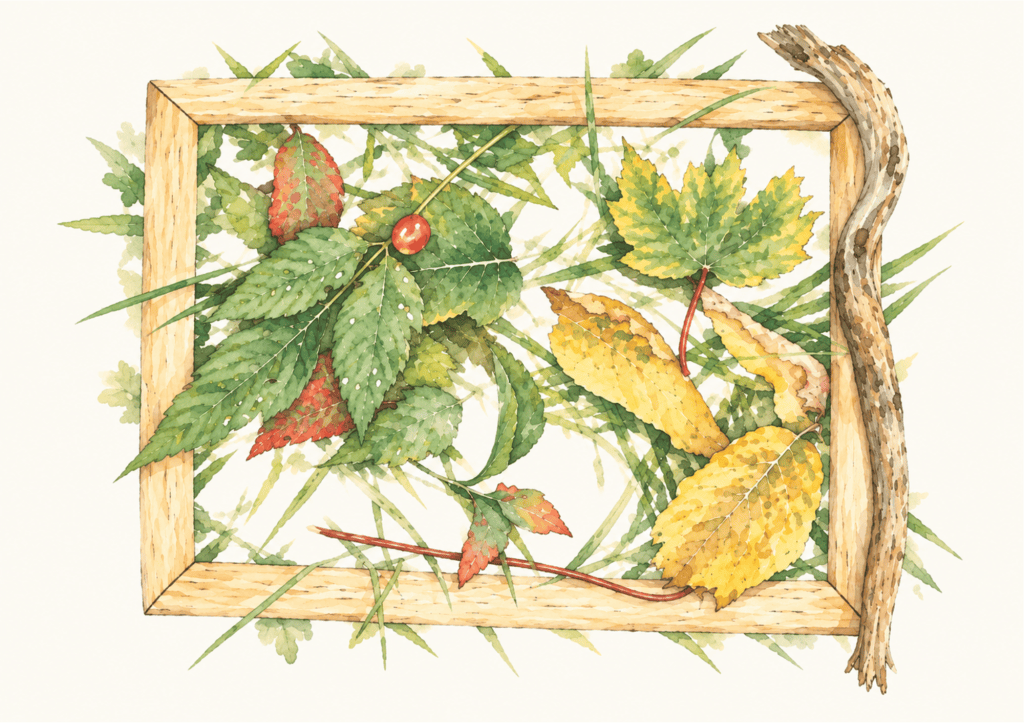
The Fall Art Collection
Art lessons for September and October, made from what the yard drops: Shades of Green, the true colours hidden in a leaf, ephemeral art, leaf printing, nature weaving, self-portraits, and more. Each one fits inside one block and needs almost nothing from the art cupboard.
Three free learning activity guides
One for each category, each with an assessment tool and its student journal pages. Subscribe once, and all three arrive in the welcome email. I will also let you know the day the collections are ready.
One thing before you go out
Before you take students outside, check your board’s policies and walk it through with your principal. If you work in a daycare or a licensed program, talk to your supervisor and build a plan together.
Risk is part of the value of this work. It is also the part that needs a grown-up conversation with the people responsible for your site before the first visit, not after if something goes sideways.
I never set out to become an outdoor educator. In my second year of teaching, I was voluntold to sign up for a two-part session at our board’s outdoor education centre, and that was that. Over a decade later, most of what I share here comes from what I learned on the school grounds.

